Symptoms & Detection
Know the warning signs. Understand your risk. And learn why the most dangerous thing about early prostate cancer is often — no symptoms at all.
Symptoms & Detection
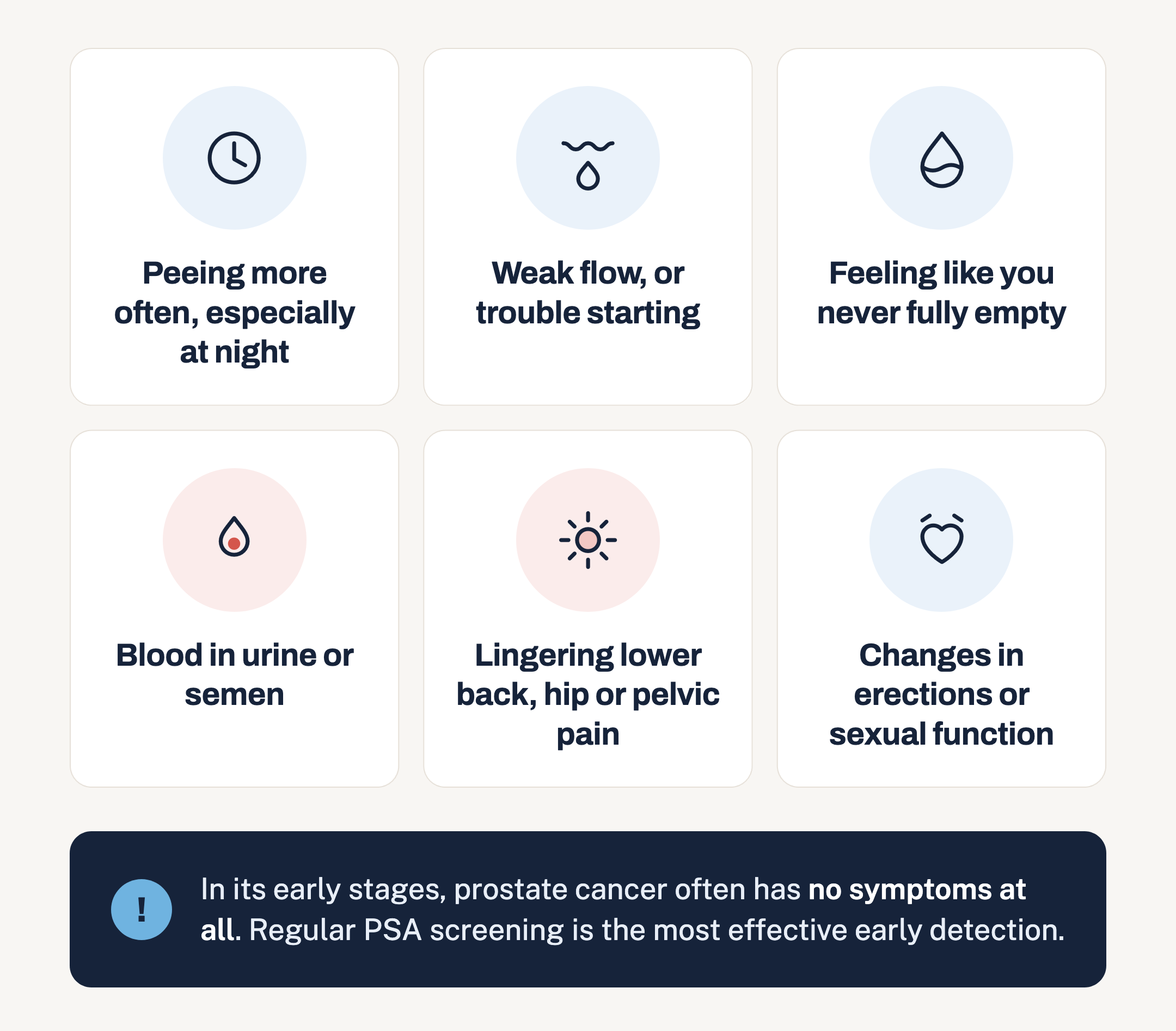
In its early stages, prostate cancer often has no symptoms at all. This is why regular PSA screening — not waiting for signs — is the most effective form of early detection for Black men.
i. Know Your Family History
Prostate cancer can run in families, increasing your risk significantly:
- If your father, grandfather, brother, or uncle had it, your risk is higher
- Having one close relative with prostate cancer doubles your risk
- If two or more close relatives were diagnosed before age 60, your risk is even higher
Have the conversation with your older male relatives. Has anyone had prostate issues? Have they been tested? These questions might feel awkward, but they could literally save your life.
ii. Early Symptoms
When signs do appear, they can be sneaky, easily dismissed as "just getting older." Pay attention to these:
- Peeing feels different: Harder to start, weak flow, or feeling like you didn't empty fully
- Increased frequency: Especially at night. Waking up multiple times to urinate
- Persistent pain: A dull ache in your lower back, hips, or pelvis that lingers
- Blood in urine or semen: Less common, but don't ignore it
- Changes in sexual function: Prostate issues can sometimes affect erections
iii. Not Every Prostate Problem Means Cancer
Symptoms don't always mean cancer. The prostate can act up for other reasons:
- Benign Prostatic Hyperplasia (BPH): An enlarged prostate (happens to most men with age). Not cancer, but can cause more bathroom trips and slow urine flow.
- Prostatitis: A prostate infection or inflammation. Often comes with pain and urinary issues, especially in younger men. Treatable with medication.
The only way to know whether something is cancer or not is through proper testing. Never self-diagnose, and never ignore symptoms hoping they'll go away.
iv. Questions to Ask Your Doctor
Here are key questions to bring to your appointment:
- Has the cancer spread outside of my prostate gland?
- What is the best treatment for the stage I have?
- What are the treatment risks and side effects?
- Is my family at risk? Should we get genetic tests?
- What kind of follow-up care do I need after treatment?
- What signs of complications should I watch for?
No question is too small. If you don't understand something, ask your doctor to break it down.
v. How to Track Symptoms
Since early prostate cancer often doesn't cause symptoms, keeping track of small changes in your body is important:
- Know what's normal for you. Notice changes in how often you pee, difficulty starting, or discomfort
- Keep a symptom log. Write down patterns: frequency, severity, timing. Your doctor will find this useful
- Listen to your body. Fatigue, unexplained weight loss, or lower back pain that persists
- Don't wait for pain. Prostate cancer doesn't always cause pain early. Don't use the absence of pain as a reason not to act